A common mistake in Newmarket is treating a raft foundation like a simple thick slab on any soil. The glacial geology north of the Oak Ridges Moraine is unforgiving. A standard design without proper subgrade analysis leads to excessive differential settlement and structural cracks within the first two frost cycles. Our approach to raft/mat foundation design at 44.0563 latitude starts with the actual bearing capacity of the underlying Newmarket Till. We don't guess. The grain-size distribution of the substrate dictates the drainage potential, and the atterberg-limits of the clay fraction reveal the true plasticity risk under saturated conditions. A rigid mat system distributes the structural load, but only if the modulus of subgrade reaction is correctly calculated from field data.
A raft foundation on Newmarket Till without a subgrade reaction modulus derived from field tests is a structural gamble.
Methodology and scope
Local considerations
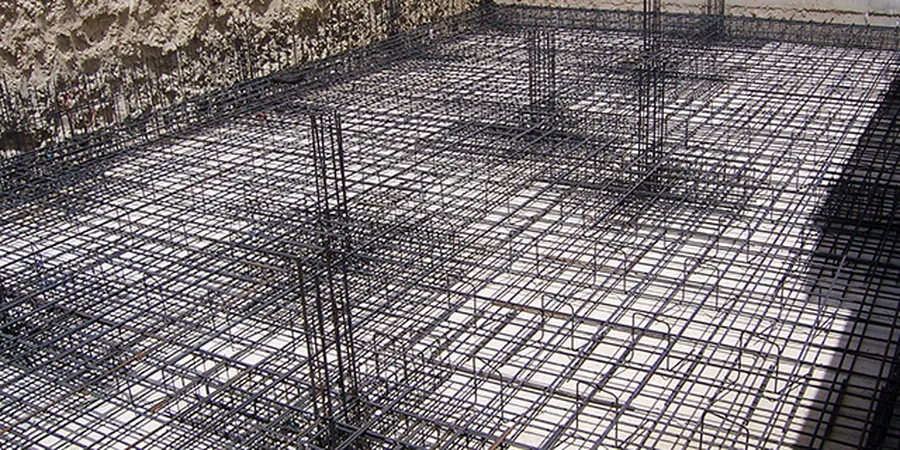
A mid-rise condominium project on Davis Drive encountered a hidden layer of soft, organic silt at a depth of 4 meters during excavation. The initial geotechnical report missed it because the boreholes stopped at 3 meters. The proposed strip footings would have sunk into the organics within months. We switched the foundation concept to a structurally reinforced raft/mat foundation design. By treating the mat as a rigid body, we bridged the soft pocket without deep piling. The key was the modulus of subgrade reaction. We didn't use a textbook value. We ran plate load tests on the exposed till and adjusted the mat's rigidity to limit the differential settlement to under 12 mm. Ignoring a single soft lens in Newmarket's complex stratigraphy can turn a Class A building into a perpetual underpinning nightmare.
Applicable standards
NBCC 2020 (National Building Code of Canada), CSA A23.3-14 (Design of Concrete Structures), ASTM D1194 (Plate Load Test for Soil Reaction)
Associated technical services
Geotechnical Exploration for Mat Support
We execute a rigorous drilling and sampling program to identify the thickness of the Newmarket Till and any interbedded silt layers. The exploration includes in-situ vane shear tests and laboratory consolidation tests to predict total and differential settlement under the mat's footprint.
Structural Raft Design and Soil-Structure Interaction
We model the mat as a plate on an elastic foundation using finite element analysis. The input parameters are the field-derived modulus of subgrade reaction and the factored column reactions. The output is a detailed reinforcement layout that manages punching shear at column interfaces and controls flexural cracking at midspan.
Typical parameters
Frequently asked questions
What is the typical cost range for a raft/mat foundation design in Newmarket?
For a standard residential or light commercial project in Newmarket, the professional design fee for a raft/mat foundation typically ranges between CA$1,640 and CA$6,290. The final cost depends on the complexity of the soil profile and the number of column loads to be analyzed.
When is a raft foundation preferred over isolated footings in Newmarket?
A raft is the logical choice when the bearing capacity of the soil drops below 150 kPa or when the total area of isolated footings exceeds 50% of the building footprint. In Newmarket's glacial till, we also recommend a mat when the stratigraphy shows erratic soft lenses that would cause differential settlement in a spread footing system.
How does the frost depth in Ontario affect the mat design?
The Ontario Building Code mandates a minimum footing depth of 1.2 meters to prevent frost heave. For a raft foundation, the entire thickened edge must reach this depth. We also specify a non-frost-susceptible granular fill layer beneath the mat to intercept capillary water and mitigate the risk of ice lens formation at the slab interface.
What soil parameters are critical for a mat foundation on Newmarket Till?
The undrained shear strength of the clay fraction and the permeability of the silty sand lenses are the two critical parameters. We derive the modulus of subgrade reaction (Kv) from these values. A high plasticity index in the till requires a stiffer mat to counteract the soil's volume change potential during seasonal moisture fluctuations.