In-situ testing across Newmarket, Ontario provides direct evaluation of subsurface conditions without disturbing the natural soil fabric, a critical requirement given the region’s glacial till deposits, silty sand layers, and near-surface groundwater. These methods deliver real-time strength, stiffness, and permeability data essential for verifying design assumptions under the Ontario Building Code and local conservation authority guidelines. Common field programs include sand cone density testing for compaction verification and direct shear vane assessments in cohesive soils, ensuring earthworks meet project specifications.
Shallow and deep foundation designs for residential subdivisions, commercial plazas, and infrastructure corridors depend on accurate in-situ parameters to manage settlement and bearing capacity risks. Supplementary investigations such as test pit logging and monitoring well installation integrate seamlessly with in-situ campaigns, building a defensible geotechnical model for engineers and municipal reviewers.
An anchor design is only as reliable as the stratigraphy it assumes. In Newmarket's fractured till, bond stress is local, not generic.
Methodology and scope
Local considerations
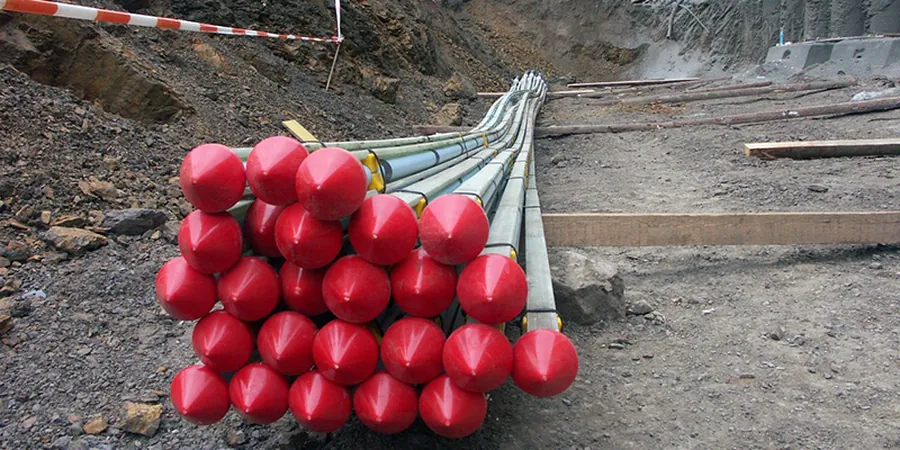
The drilling rig arrives and the operator sets up over the hole. In Newmarket, a hollow-stem auger or rotary duplex system threads through the till. The risk window opens the moment the borehole stays open and unsupported. A pocket of saturated sand can collapse the hole. The grout can fracture the ground if the pressure isn't matched to the overburden. We manage this by specifying maximum grout pressures for each anchor and requiring continuous grout take logs. If the grout take spikes, the installation stops and the design is re-evaluated. Proof testing is non-negotiable. Every active anchor gets loaded to 133% of the design load and held. Creep is measured with a dial gauge. A single anchor that fails the creep test triggers a full review of the bond length assumptions for the entire wall. In Newmarket, where the till can be stiffer than expected, the bigger risk is often brittle failure at the grout-soil interface, not the tendon.
Applicable standards
CSA A23.3-19 Design of Concrete Structures (Annex D – Anchors), PTI DC35.1-14 Recommendations for Prestressed Rock and Soil Anchors, OPSS.MUNI 206 (Ontario Provincial Standard Specification – Excavation Support)
Associated technical services
Tieback Anchor Design
Active prestressed anchors for soldier pile and secant wall systems. Full load-deformation analysis with bond zone sizing specific to Newmarket till.
Passive Anchor (Soil Nail) Design
Grouted bars relying on ground deformation. We design the nail pattern, length, and facing capacity for deep excavations in the Oak Ridges Moraine stratigraphy.
Anchor Testing & Verification
Performance, proof, and extended creep tests executed per PTI and CSA standards. We supervise the testing and interpret the load-hold data to confirm the design.
Typical parameters
Frequently asked questions
What does active/passive anchor design cost in Newmarket?
Design fees for a Newmarket shoring project typically range from CA$1,320 for a small residential tieback set to CA$4,550 for a commercial excavation with multiple anchor rows and full proof testing specifications. The final figure depends on the number of anchors, the complexity of the stratigraphy, and the testing protocol required by the geotechnical report.
Which anchor type works better in Newmarket's till, active or passive?
It depends on the allowable movement. Active tiebacks are pre-stressed and control deformation from the start, so they suit sensitive adjacent structures. Passive soil nails need slight ground movement to mobilize resistance, which can work for open sites with no nearby utilities or foundations. We often combine both on the same project.
How do you test an anchor to confirm it meets the design load?
We follow PTI and CSA procedures. Each production anchor undergoes a proof test: load increments up to 133% of the design load, with creep measured at each step. The total movement must stabilize within specified limits. If creep exceeds the threshold, the anchor is rejected and the bond length is re-evaluated.