A crew hit a pocket of grey clay four metres down on Davis Drive last spring. The excavator bucket came up slick and the site superintendent knew immediately—this stuff would swell and shrink with every rain cycle. That is where Atterberg limits become the project’s insurance policy. Newmarket sits on the Oak Ridges Moraine, a rolling deposit of glacial till, silt and clay left by the last ice sheet. The ground shifts personality from one concession block to the next. A routine grain-size analysis tells you the sand-silt split, but Atterberg limits reveal how the fines will behave when wet. Our lab runs the full suite—liquid limit, plastic limit and plasticity index—on samples pulled from test pits or SPT splits. For deeper clay units near the Holland River floodplain, we often pair Atterberg testing with triaxial consolidated-undrained tests to bracket strength under saturated conditions before a footing design leaves the office.
A plasticity index above 15 in Newmarket’s glacial clays means you need to look hard at your footing drainage—don’t skip the granular blanket.
Methodology and scope
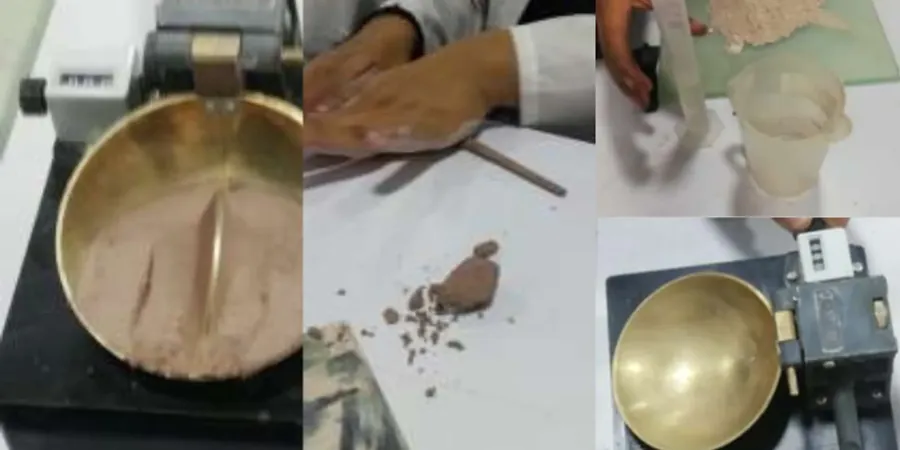
- Sample preparation starts with sieving through the No. 40 (425 µm) sieve per ASTM D4318.
- Liquid limit is reported as the moisture content at 25 blows on the flow curve.
- Plastic limit is the average of three rolled-thread determinations at 3.2 mm diameter.
- Plasticity index (PI = LL – PL) drives classification under the Unified Soil Classification System.
- Shrinkage limit testing is available for expansive clay assessment on residential subdivisions.
Local considerations
Sites along the Holland River corridor behave differently from the drumlin high ground west of Yonge Street. Near the river, we see organic silts with liquid limits pushing 65 percent and natural moisture content already above the plastic limit. Those soils are one rainstorm away from becoming soup. Up on the moraine ridges, the till is stiffer and the PI runs low—often below 10—which sounds safe until you realize that low-plasticity silt erodes internally when groundwater moves. Both extremes carry risk that a standard bearing-capacity calculation does not capture. Atterberg limits give the engineer the missing piece: the soil’s mineral sensitivity. When the PI is high, the clay fraction is likely montmorillonitic and the volume-change potential is real. When the liquidity index approaches 1.0, the soil is close to remoulded failure. Newmarket’s freeze-thaw cycles amplify these effects because water migrates toward the frost front, concentrating in silt lenses. A winter excavation left open can heave two inches before the concrete crew arrives. Our lab reports include liquidity index and consistency index as standard outputs, not as extras, because in this climate those numbers matter as much as the bearing pressure.
Applicable standards
ASTM D4318-17e1: Standard Test Methods for Liquid Limit, Plastic Limit, and Plasticity Index of Soils, ASTM D2487-17e1: Standard Practice for Classification of Soils for Engineering Purposes (Unified Soil Classification System), ASTM D2216-19: Standard Test Methods for Laboratory Determination of Water (Moisture) Content of Soil and Rock by Mass, CSA A23.3: Design of Concrete Structures (referenced for foundation subgrade assessment), Ontario Building Code (OBC) Part 4: Structural Design (earthquake and foundation provisions referencing soil classification)
Associated technical services
Liquid Limit and Plastic Limit per ASTM D4318
Multi-point Casagrande cup method for liquid limit plus rolled-thread plastic limit on the same sample. Delivers the flow curve, PI and USCS classification symbol required for foundation design reports submitted to Newmarket building officials.
One-Point Liquid Limit (correlation method)
For projects with tight turnaround where the soil type is well-characterized from prior boreholes. We validate against the multi-point curve and apply the ASTM correction factor, reporting the result with a note on the confidence interval.
Full Consistency Limits Suite
Adds shrinkage limit, liquidity index and consistency index to the standard LL/PL report. Used extensively for expansive clay assessment on residential subdivisions around the Mulock Drive and Leslie Street corridors where varved clays are common.
Typical parameters
Frequently asked questions
How much does Atterberg limits testing cost for a Newmarket project?
For a standard liquid limit and plastic limit pair on a single sample, budget between CA$80 and CA$160 depending on whether rush processing is needed and how many points are run on the liquid limit curve. Volume pricing applies for multi-sample projects like subdivision investigations.
Why do Newmarket soils require Atterberg testing instead of just grain size?
Grain size tells you the sand-silt-clay percentages, but it does not tell you what kind of clay mineral you have. Newmarket’s glacial deposits contain everything from inactive kaolinite to highly active smectite. Two soils with identical grain-size curves can have plasticity indices of 5 and 45—meaning completely different swell potential and shear strength. Atterberg limits distinguish them.
How long does the lab take to deliver Atterberg results?
Standard turnaround is three to four business days because the liquid limit requires oven-drying multiple moisture-content specimens and the plastic limit needs hand-rolling. We offer a two-day rush service when the site is waiting on a concrete pour decision. Very large programs can be scheduled with staggered delivery.
What sample quality do you need for Atterberg testing?
About 150 grams of material passing the No. 40 sieve, taken from a representative split of the soil sample. The sample should be sealed in a moisture-tight bag immediately after collection. Disturbed samples from SPT splits or test pit walls are acceptable because the test remoulds the soil anyway. We cannot run Atterberg limits on oven-dried soil without rehydrating it per the standard.