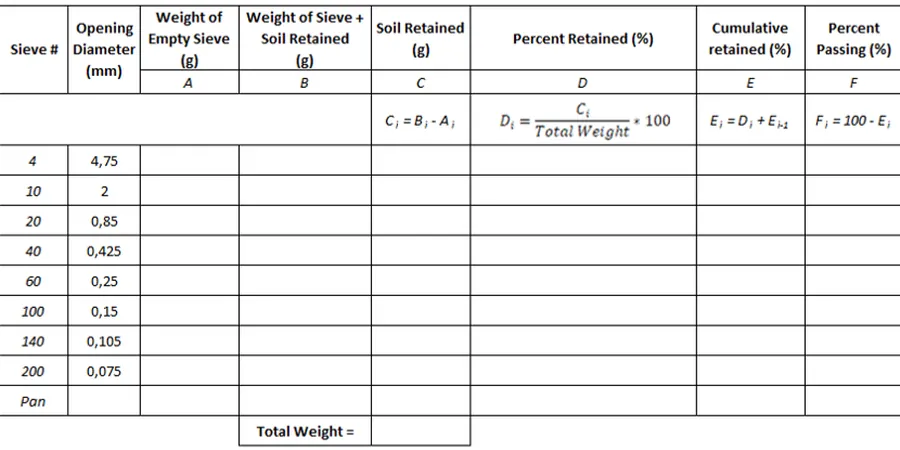
We regularly see contractors in Newmarket run into trouble when they skip a proper particle size distribution test on fill material. The unsorted glacial till across York Region can look uniform in the pit but contains pockets of silt that wreck compaction and hold water against foundation walls. A grain size analysis using both mechanical sieves and hydrometer sedimentation resolves that risk by quantifying the exact silt and clay fraction. We run the full ASTM D6913 and D7928 procedure in our ISO 17025 accredited lab on Harry Walker Parkway, and the report gives engineers the numbers they need for frost heave susceptibility under NBCC and drainage design per Ontario Building Code. Pairing this with a Proctor test locks down the compaction spec so the placed fill actually performs.
A hydrometer curve that shows 12% clay against an assumed 3% changes the entire frost protection depth on a Newmarket footing.
Methodology and scope
Local considerations
In Newmarket, we have seen imported granular fill rejected by municipal inspectors because the grain size curve missed the OPSS 1010 grading envelope by a few percent on the No. 4 sieve. The risk is not just rejection; it is delayed compaction testing and idle crews. A low D10 value combined with high silt content creates frost heave conditions that lift shallow footings during a typical Ontario winter with sixty freeze-thaw cycles. The grain size analysis also feeds directly into the hydraulic conductivity estimate for subsurface drainage design around retaining walls and basement slabs. Without a hydrometer curve, the design defaults to conservative assumptions that inflate clear stone requirements and pipe sizing. Getting the numbers right on the first submission keeps the project schedule intact and avoids the cost of re-testing and re-grading.
Applicable standards
ASTM D6913-22, ASTM D7928-21, OPSS 1010 (Ontario Provincial Standard Specification), NBCC 2020 Division B Part 9, O. Reg. 332/12 Building Code
Associated technical services
Full Sieve + Hydrometer Package
Combined D6913 and D7928 analysis delivering the complete particle size distribution curve, USCS classification, and coefficients of uniformity and curvature.
Hydrometer Only (Fine Fraction)
Sedimentation analysis for samples with more than 12% passing the No. 200 sieve. Includes temperature-corrected readings and clay fraction determination.
Wash Sieve (No. 200 Separation)
Wet sieving procedure to accurately separate fines from coarse material before mechanical shaking, avoiding dry particle agglomeration errors.
OPSS 1010 Compliance Check
Grading curve plotted against Ontario MTO granular A, B, and Select Subgrade envelopes with pass/fail callout for municipal and MTO projects.
Typical parameters
Frequently asked questions
How much does a grain size analysis cost for a Newmarket project?
The combined sieve and hydrometer test runs between CA$130 and CA$240 per sample, depending on the gravel fraction and whether organic content pre-treatment is required. Rush results within 48 hours carry a small surcharge.
What minimum sample mass do you need for a reliable hydrometer test?
We need at least 200 grams of material passing the No. 10 sieve for the hydrometer analysis alone. For the full combined test including coarse sieves, we ask for a representative 5 kg field sample from the Newmarket site to ensure all particle sizes are captured.
How does the grain size curve relate to frost heave potential in Ontario?
Soils with more than 10% fines passing the 0.02 mm sieve are generally considered frost-susceptible under Ontario Building Code. The hydrometer curve gives us the exact percentage in this range, which the geotechnical engineer uses to specify the required granular cover depth over footings.
Can you classify the soil for septic system design in York Region?
Yes. The grain size distribution combined with Atterberg limits provides the USCS classification and texture group required by the Ontario Building Code for on-site sewage system design. We report the exact sand, silt, and clay fractions needed for the percolation assessment.